



Añana Saltworks
Salinas takes its name from the salt production that has been carried out since prehistoric times. It’s easy to imagine the development of this town around a product that, at certain points in history, was as valuable as gold or currency.
Above all, Salinas is a white landscape, dazzling between June and September, and ochre-gray like a ruin in winter.
Taking advantage of the slopes of the Salt Valley, across an area of 120 hectares, the most important inland saltworks in all of Europe were built, in a complex network of more than 5,000 “eras” or platforms supported by wooden frames and stone walls. This is the area where the salt extraction takes place.
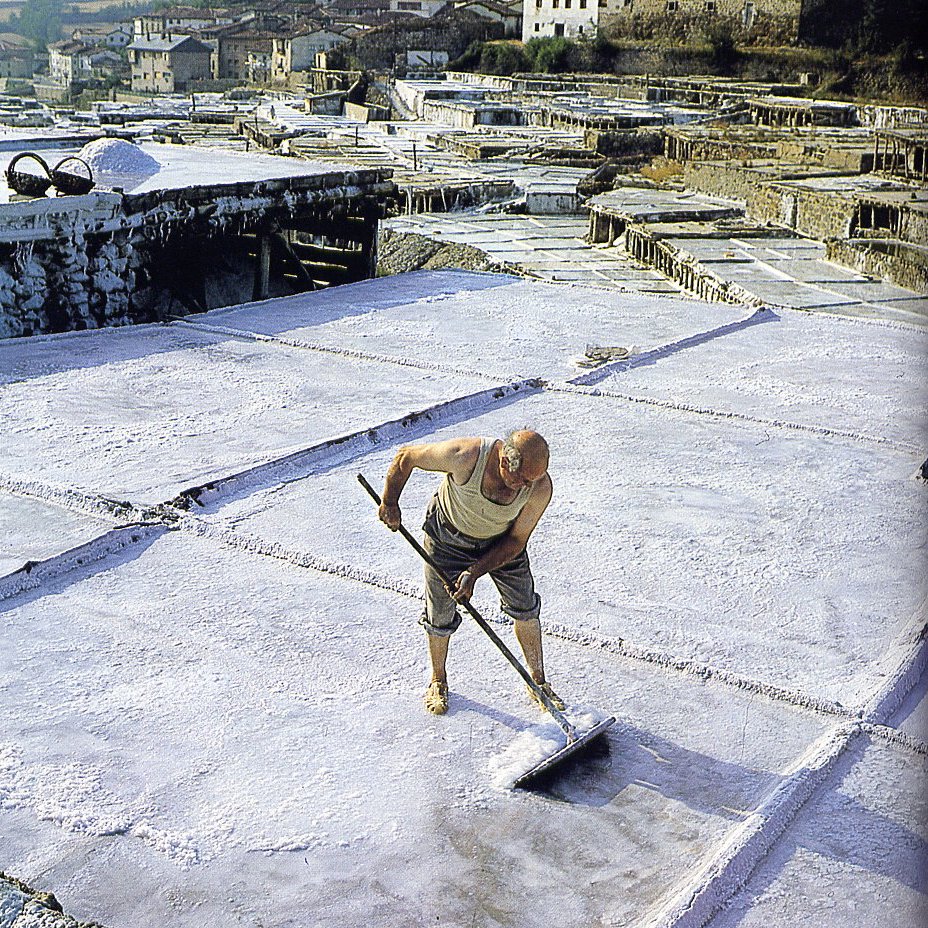
The Salt Valley is currently closed to the public along most of its length, although the restored areas are open. Salt production is minimal, representing less than 3% of the valley’s total peak production.
The need to intervene in the saltworks stems from their progressive abandonment over the last few decades, ever since salt production ceased to be profitable.
In the 1960s, production peaked at over 5,000 evaporation ponds. The decline began, dropping to around 2,500 ponds in operation by the mid-1980s and reaching just over 100 ponds currently in use.