



Collegiate Church of Valpuesta
The Valpuesta Monastery (built on the site of a hermitage discovered by Bishop John in 804) served for nearly three hundred years as a governing center for other monasteries and churches. It consists of a single nave that ends to the east in the apse, perhaps the narrowest part due to its small windows. Countless stories have unfolded within its walls, but undoubtedly the most remarkable are those revealed in its Valpuesta cartularies, documents that show us the earliest traces of the Castilian language.
Of the Valpuesta Collegiate Church, we should highlight above all its stained-glass windows, the cloister which houses four chapels, and the altarpiece.
The stained glass windows
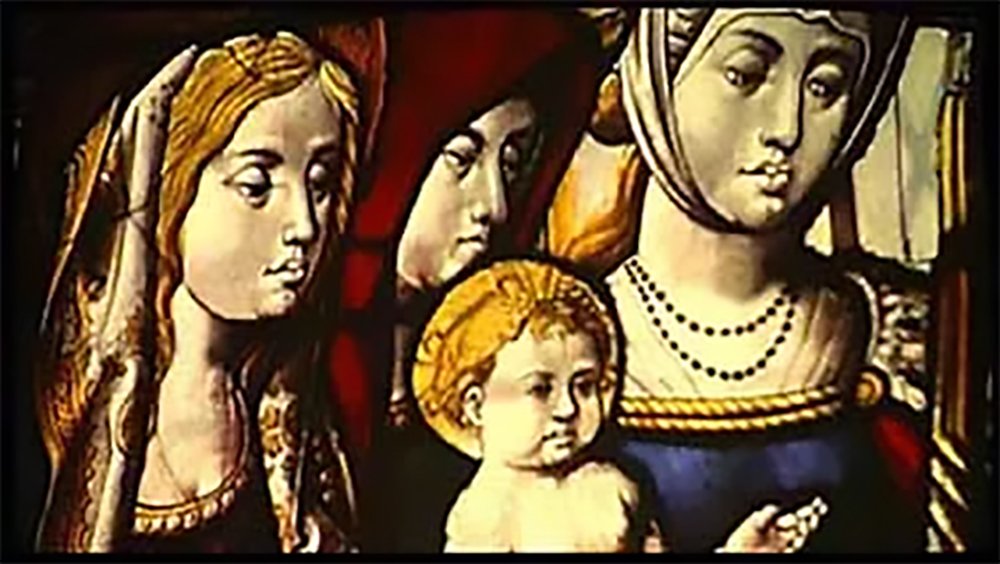
These stained-glass windows were positioned on the east side of the building to receive the morning light. Because the church’s main altarpiece partially obscured them, they could not be fully appreciated until very recently.
We can see scenes such as the Adoration of the Magi and the Crucifixion, as well as angels, apostles, lions, cities, incredible landscapes, and even well-hidden esoteric symbols.
The importance of these windows is comparable to those in the Chapel of the Constable in Burgos Cathedral or those in León Cathedral. This gives us an idea of the significance the Collegiate Church of Valpuesta held in its time.
The Cloister
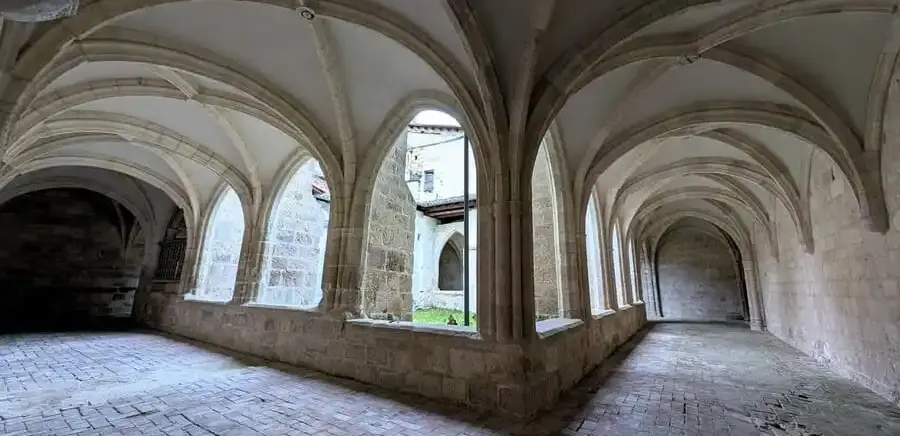
The cloister of a monastery is the center of the monks’ daily activities, while the church is the center of their spiritual life. The cloister, usually rectangular or square, surrounds the main courtyard and serves as a link between the various convent buildings. It is also the place where the community celebrates processions and enjoys leisure and recreation.
Within the cloister are four chapels: one containing the altarpiece of Christ, another housing the tomb of Archdeacon Sebastian, and two additional chapels, one containing the tomb of the Guinea and Pinedo families, and another of unknown dedication.
The Altarpiece
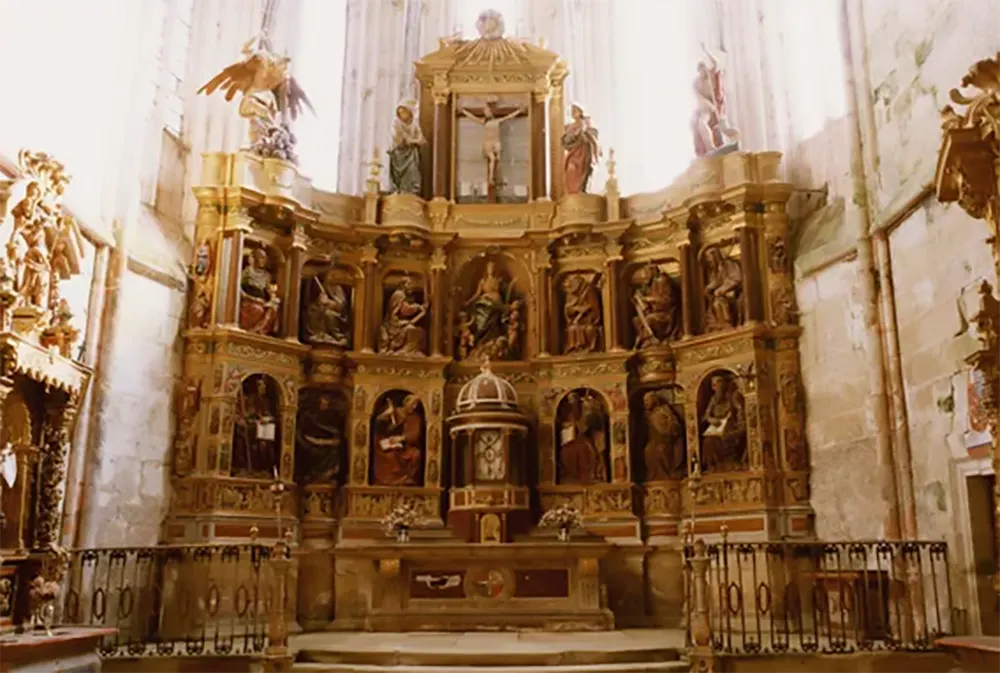
The altarpiece in the collegiate church of Valpuesta is of exceptional artistic quality. Twelve important sculptures, representing the twelve apostles, stand out. These figures are highly expressive. The lower section, or predella, deserves special mention, composed of a dozen small reliefs carved and painted to resemble ivory. The most remarkable feature of the altarpiece is its predella, which depicts the life of the Virgin Mary, from her betrothal to her Assumption.